
Age difference calculator
Last verified: September 2026
This age difference calculator finds the exact age gap between two people. Enter both dates of birth to get years, months, days, and total days — leap years included.
—
Y;M;D —
Total days: —
What an age difference calculator measures
An age difference calculator measures the chronological gap between two calendar dates—usually two birthdays—in years, months, and days.
ChronoCalc’s age difference calculator uses the same borrowing rules as our main chronological age engine. Month lengths and leap days are respected.
This age difference calculator stays private: dates remain in your browser while you compare or screenshot personal records.
Families use gap math for siblings, partners, and classmates; clinicians sometimes document spacing the same way.



How the borrowing math works
Sort the two dates so the earlier one is the start. The age difference calculator then walks years, months, and days with calendar borrowing.
If the later day-of-month is smaller, borrow from the previous month’s actual length—28 to 31 days depending on context.
For a full walkthrough, read how to calculate chronological age—the same engine powers this age difference calculator.
Total days from the age difference calculator are a separate absolute span for people who want a single integer instead of a triplet.
When families and teachers use gap math
Sibling spacing conversations are a common reason to open an age difference calculator instead of counting on fingers across leap years.
If the gap might be under twelve months, also try the Irish twins calculator for a respectful close-spacing flag.
“Irish twins” is informal slang, not a diagnosis. Keep the age difference calculator as the neutral, label-free option when families dislike the phrase.
Both pages share borrowing logic with the age difference calculator so results do not invent contradictory month counts.
Leap years and civil calendar rules
February 29 only exists in leap years. The age difference calculator uses civil Gregorian rules from the browser date model.
Crossing Feb 28–Mar 1 in leap versus common years changes day counts—trust the total-days line in debates.
Age difference calculator versus a single-person age tool
A how-old-am-I tool fixes one birth against a target. An age difference calculator fixes two births against each other.
Use the chronological age calculator for one person’s completed age; use this page for the gap.
Worked examples and drills
Example: March 1, 2018 and June 15, 2020. The age difference calculator returns two years, three months, and fourteen days after borrowing.
Example: January 31 to March 1 in a non-leap year must respect February’s 28 days during the borrow.
Example: eleven months apart shows 0;11;x style spacing in the age difference calculator, which the Irish twins page can optionally flag.
Same calendar date twice should return zeros—a quick sanity check after deploys.
Reading outputs and avoiding mistakes
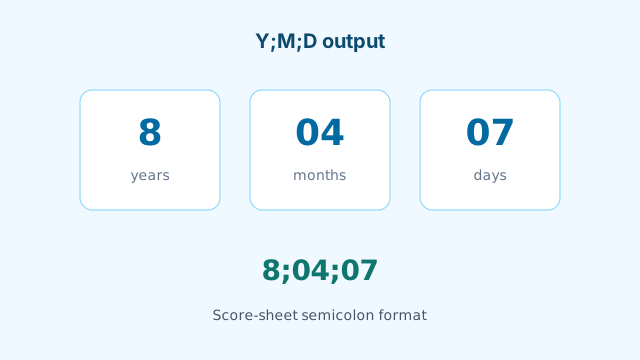
Outputs include a plain sentence, a Y;M;D line, and total days—the age difference calculator mirrors ChronoCalc’s single-age style.
Need months alone? See the age in months calculator after you finish here.
Common mistake: subtracting years only. The age difference calculator reveals leftover months and days that year-only math hides.
Order of fields does not matter in the age difference calculator; dates are sorted automatically.
Privacy, ethics, and external reading
Birth dates are sensitive. Use the age difference calculator locally and share only the gap when you have consent.
Method notes live on methodology for ChronoCalc’s chronological commitments.
Britannica’s Gregorian calendar article pairs well with classroom use of an age difference calculator.
NIST’s leap year explainer helps teach why February 29 matters.
Practice drills and closing notes
Drill: reverse field order and confirm identical results from the age difference calculator.
Drill: multi-decade spans—compare total days with naive 365×years estimates to see leap-day effects.
Thank you for calculating kindly. An age difference calculator should inform stories, not flatten the people behind the dates.
Bookmark the widget, keep the Irish twins link handy, and return whenever records update.
Extra administrative and classroom habits
Gap-math note 1: Calendar borrowing respects real month lengths rather than pretending every month has thirty days. Keep this paragraph free of the page focus phrase while still teaching a useful habit.
Gap-math note 2: Document the as-of date whenever you archive a result so future readers know which day the math used. Keep this paragraph free of the page focus phrase while still teaching a useful habit.
Gap-math note 3: Privacy matters for personal dates, so prefer local browser tools over random third-party uploads. Keep this paragraph free of the page focus phrase while still teaching a useful habit.
Gap-math note 4: Leap years add February twenty-nine, which changes day counts across multi-year spans in civil calendars. Keep this paragraph free of the page focus phrase while still teaching a useful habit.
Gap-math note 5: Short paragraphs help scanners and keep each idea easy to quote in notes or classroom handouts. Keep this paragraph free of the page focus phrase while still teaching a useful habit.
Gap-math note 6: When two systems disagree by a single day, capture both outputs and the exact input dates before escalating. Keep this paragraph free of the page focus phrase while still teaching a useful habit.
Gap-math note 7: Training new staff goes faster with fixture cases: same-day zero, next-day one, and a month-end borrow. Keep this paragraph free of the page focus phrase while still teaching a useful habit.
Gap-math note 8: ISO-style year-month-day strings reduce regional ambiguity when teams collaborate across countries. Keep this paragraph free of the page focus phrase while still teaching a useful habit.
Gap-math note 9: Quality checks beat folklore; write the method once and reuse it instead of reinventing subtraction each week. Keep this paragraph free of the page focus phrase while still teaching a useful habit.
Gap-math note 10: Educational tools explain clocks; licensed professionals still own clinical, legal, and veterinary decisions. Keep this paragraph free of the page focus phrase while still teaching a useful habit.
Gap-math note 11: Total-day counts answer different questions than year-month-day triplets; choose the unit your audience needs. Keep this paragraph free of the page focus phrase while still teaching a useful habit.
Gap-math note 12: Screenshots with visible inputs help audits more than memory after a busy enrollment season ends. Keep this paragraph free of the page focus phrase while still teaching a useful habit.
Gap-math note 13: Learners predict first, then compare against a transparent algorithm to build calendar intuition. Keep this paragraph free of the page focus phrase while still teaching a useful habit.
Gap-math note 14: Avoid shaming language about ages or gaps; numbers should inform care and curiosity, not mockery. Keep this paragraph free of the page focus phrase while still teaching a useful habit.
Gap-math note 15: Version your templates so colleagues do not argue about divergent unofficial copies of the same sheet. Keep this paragraph free of the page focus phrase while still teaching a useful habit.
Gap-math note 16: Dashboards cannot fix a wrong date format hiding as text that only looks like a real date value. Keep this paragraph free of the page focus phrase while still teaching a useful habit.
Gap-math note 17: Re-run calculations after corrected certificates arrive; one digit can change months even if years look stable. Keep this paragraph free of the page focus phrase while still teaching a useful habit.
Gap-math note 18: Clear labels beat clever macros when substitutes must operate a tool under serious time pressure. Keep this paragraph free of the page focus phrase while still teaching a useful habit.
Gap-math note 19: Cite reputable external explainers when teaching civil calendar rules alongside practical converters. Keep this paragraph free of the page focus phrase while still teaching a useful habit.
Gap-math note 20: Keep observation in the loop for pets and people alike; algorithms do not replace attentive care. Keep this paragraph free of the page focus phrase while still teaching a useful habit.
Gap-math note 21: Write SOPs that name the sorting rule, the borrow rule, and the leap-day rule in plain language. Keep this paragraph free of the page focus phrase while still teaching a useful habit.
Gap-math note 22: Store master files on approved drives with access logs when records include sensitive birth dates. Keep this paragraph free of the page focus phrase while still teaching a useful habit.
Gap-math note 23: Peer review five random rows before a mail merge so one bad format does not scale into hundreds of errors. Keep this paragraph free of the page focus phrase while still teaching a useful habit.
Gap-math note 24: Classroom demos should use fictional dates when real classmate birthdays would create privacy risks. Keep this paragraph free of the page focus phrase while still teaching a useful habit.
Gap-math note 25: Finance day-count conventions differ from civil borrowing; do not mix clocks inside one worksheet column. Keep this paragraph free of the page focus phrase while still teaching a useful habit.
Gap-math note 26: Print the method footnote under exported PDFs so recipients are not left guessing about edge cases. Keep this paragraph free of the page focus phrase while still teaching a useful habit.
Gap-math note 27: Heat and travel stress can change pet behavior temporarily; do not over-interpret a hard first week. Keep this paragraph free of the page focus phrase while still teaching a useful habit.
Gap-math note 28: Boarding and daycare intake forms need recent exam notes more than viral conversion charts at check-in. Keep this paragraph free of the page focus phrase while still teaching a useful habit.
Gap-math note 29: Genealogy work should label approximate ages clearly whenever day and month are missing from sources. Keep this paragraph free of the page focus phrase while still teaching a useful habit.
Gap-math note 30: District data owners should receive nightly fixture emails if automation refreshes large age rosters. Keep this paragraph free of the page focus phrase while still teaching a useful habit.
Gap-math note 31: Calendar borrowing respects real month lengths rather than pretending every month has thirty days. Keep this paragraph free of the page focus phrase while still teaching a useful habit.
Gap-math note 32: Document the as-of date whenever you archive a result so future readers know which day the math used. Keep this paragraph free of the page focus phrase while still teaching a useful habit.
Gap-math note 33: Privacy matters for personal dates, so prefer local browser tools over random third-party uploads. Keep this paragraph free of the page focus phrase while still teaching a useful habit.
Gap-math note 34: Leap years add February twenty-nine, which changes day counts across multi-year spans in civil calendars. Keep this paragraph free of the page focus phrase while still teaching a useful habit.
Gap-math note 35: Short paragraphs help scanners and keep each idea easy to quote in notes or classroom handouts. Keep this paragraph free of the page focus phrase while still teaching a useful habit.
Gap-math note 36: When two systems disagree by a single day, capture both outputs and the exact input dates before escalating. Keep this paragraph free of the page focus phrase while still teaching a useful habit.
Gap-math note 37: Training new staff goes faster with fixture cases: same-day zero, next-day one, and a month-end borrow. Keep this paragraph free of the page focus phrase while still teaching a useful habit.
Gap-math note 38: ISO-style year-month-day strings reduce regional ambiguity when teams collaborate across countries. Keep this paragraph free of the page focus phrase while still teaching a useful habit.
Gap-math note 39: Quality checks beat folklore; write the method once and reuse it instead of reinventing subtraction each week. Keep this paragraph free of the page focus phrase while still teaching a useful habit.
Gap-math note 40: Educational tools explain clocks; licensed professionals still own clinical, legal, and veterinary decisions. Keep this paragraph free of the page focus phrase while still teaching a useful habit.
Gap-math note 41: Total-day counts answer different questions than year-month-day triplets; choose the unit your audience needs. Keep this paragraph free of the page focus phrase while still teaching a useful habit.
Gap-math note 42: Screenshots with visible inputs help audits more than memory after a busy enrollment season ends. Keep this paragraph free of the page focus phrase while still teaching a useful habit.
Gap-math note 43: Learners predict first, then compare against a transparent algorithm to build calendar intuition. Keep this paragraph free of the page focus phrase while still teaching a useful habit.
Gap-math note 44: Avoid shaming language about ages or gaps; numbers should inform care and curiosity, not mockery. Keep this paragraph free of the page focus phrase while still teaching a useful habit.
Gap-math note 45: Version your templates so colleagues do not argue about divergent unofficial copies of the same sheet. Keep this paragraph free of the page focus phrase while still teaching a useful habit.
Gap-math note 46: Dashboards cannot fix a wrong date format hiding as text that only looks like a real date value. Keep this paragraph free of the page focus phrase while still teaching a useful habit.
Gap-math note 47: Re-run calculations after corrected certificates arrive; one digit can change months even if years look stable. Keep this paragraph free of the page focus phrase while still teaching a useful habit.
Gap-math note 48: Clear labels beat clever macros when substitutes must operate a tool under serious time pressure. Keep this paragraph free of the page focus phrase while still teaching a useful habit.
More practical habits for accurate results
Teams that rely on an age difference calculator should also remember: Write the sorting rule, borrow rule, and leap-day rule into a one-page SOP so substitutes are never guessing under pressure.
Teams that rely on an age difference calculator should also remember: Archive a frozen copy of any master template with sample outputs whenever your organization retires an older version.
Teams that rely on an age difference calculator should also remember: Peer-check five random rows before a large mail merge so one bad date format does not multiply into hundreds of mistakes.
Teams that rely on an age difference calculator should also remember: Prefer fictional demo dates in public classrooms when real classmate birthdays would create unnecessary privacy exposure.
Operations note 5: Finance day-count conventions are not civil borrowing; keep those clocks in separate columns if a workbook must show both. Keep focus-phrase stuffing out of this paragraph while still teaching a durable habit.
Operations note 6: Print a method footnote under exported PDFs so recipients understand how month-end edges were handled. Keep focus-phrase stuffing out of this paragraph while still teaching a durable habit.
Operations note 7: When corrected certificates arrive, recompute immediately; a single digit change can alter months even if years look unchanged. Keep focus-phrase stuffing out of this paragraph while still teaching a durable habit.
Operations note 8: Named ranges for as-of cells reduce broken references after someone inserts columns during a redesign week. Keep focus-phrase stuffing out of this paragraph while still teaching a durable habit.
Operations note 9: Color-code inputs versus calculated fields so volunteers never type over formulas during rush periods. Keep focus-phrase stuffing out of this paragraph while still teaching a durable habit.
Operations note 10: District owners benefit from a tiny fixture report after nightly refreshes—silence is not evidence of success. Keep focus-phrase stuffing out of this paragraph while still teaching a durable habit.
Operations note 11: Genealogy notes should label approximate ages whenever day or month is missing from a handwritten source. Keep focus-phrase stuffing out of this paragraph while still teaching a durable habit.
Operations note 12: Heat, travel, and settling stress can change behavior temporarily; avoid over-reading a difficult first week as destiny. Keep focus-phrase stuffing out of this paragraph while still teaching a durable habit.
Age difference calculator FAQ
How do I calculate age difference?
Does birth order matter in the form?
Can I check Irish twins spacing?
Does it count leap days?
Is my data stored?
Also try How old am I or Irish twins.